


Endüstriyel Hücresel Yönlendirici
Product ID: TR-444
Tespro tarafından bağımsız olarak geliştirilen TR-444 endüstriyel yönlendirici, küresel 2G/3G/4G ağlarını, Gigabit Ethernet (1*WAN 2*LAN) ve çift bantlı Wi-Fi 4/6'yı destekler. 1*RS232, 2*RS485 ve 4*GPIO arayüzleri ile Modbus/BACnet desteğiyle üretilen bu cihaz, IoT ve endüstriyel otomasyon için güvenilir bağlantı sağlar.
-
Ağ
2G / 3G / 4G
-
Arayüz
1*WAN 4*LAN 10 / 100 / 1000Mbps
-
Wi-Fi
Wi-Fi 4 (802.11b/g/n) / Wi-Fi 6 (802.11a/b/g/n/ac/ax)
-
Seri & G/O
1*RS232 2*RS485 4*GPIO
Şimdi Ücretsiz Teklif Alın
İndir

TR-344 Endüstriyel Yönlendirici Video
TR-444 Endüstriyel LTE Yönlendirici, güvenilir 4G/LTE bağlantısı, endüstriyel dayanıklılık, güvenli ağ ve güvenilir uzaktan bağlantı sunarak akıllı IoT cihazlarını ve saha dağıtımlarını otomatikleştiriyor.
Features
Temel Avantajlar

4G/3G/2G ve Çift SIM/eSIM
Çeşitli hücresel ağ erişimini (2G/3G/4G/5G) destekler, Cat1/Cat4/Cat6 dahil 4G LTE seçenekleriyle donatılmıştır. Esnek anahtarlama ve bağlantı yedeklemesi için çift SIM ve çift eSIM özellikleriyle donatılmıştır.

Gigabit Ethernet Arayüzü ve Wi-Fi
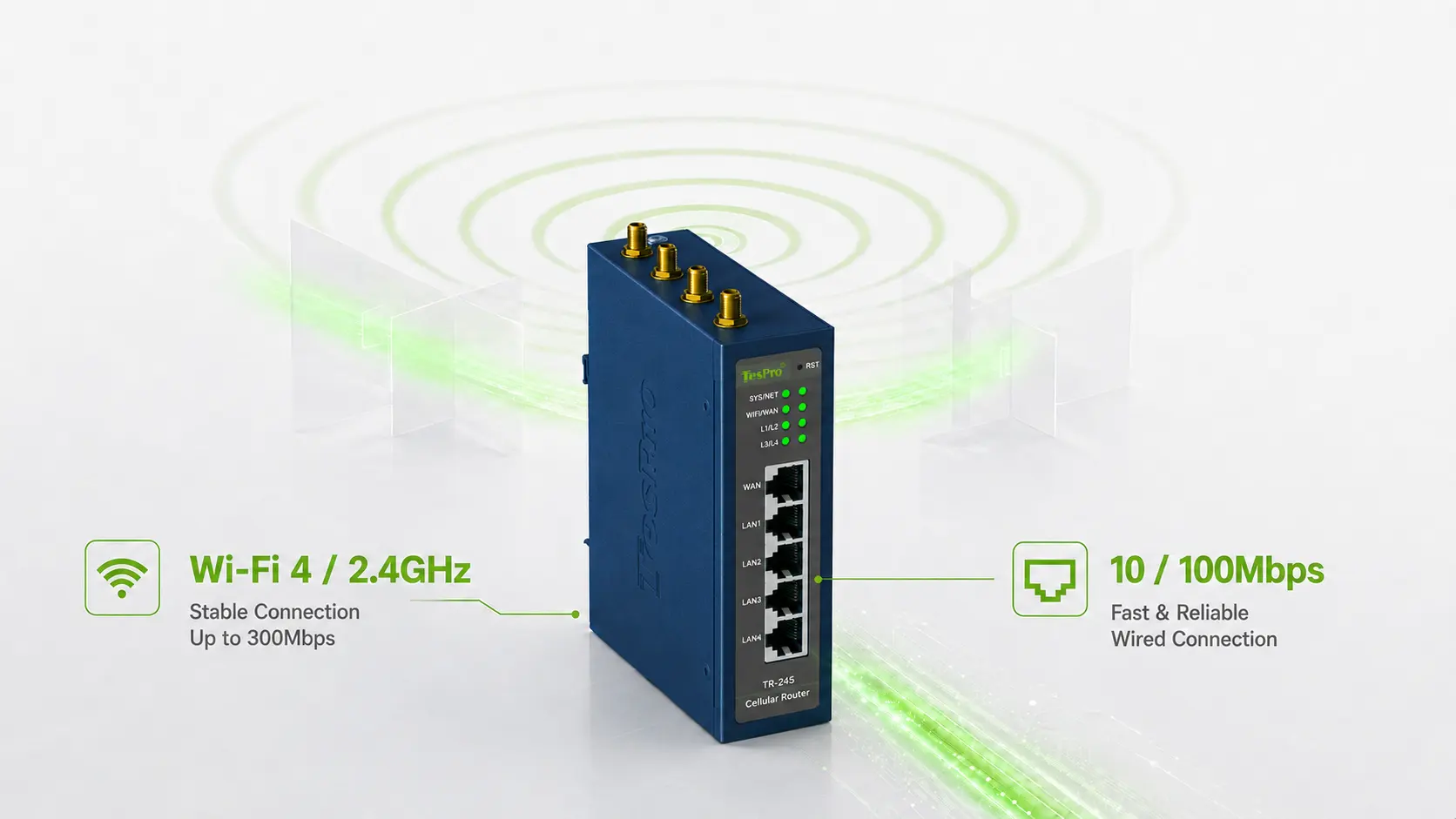
WAN/LAN otomatik algılamayı destekleyen Gigabit Ethernet portlarıyla donatılmış ve çift bantlı Wi-Fi 4 (2.4GHz) ile Wi-Fi 6 (5GHz) özelliklerine sahip olan bu cihaz, endüstriyel ekipman bağlantısı, veri iletimi ve yerinde ağ ihtiyaçlarını karşılamak için yüksek hızlı kablolu iletimi kullanışlı kablosuz erişimle birleştirir.

Entegre Seri ve GPIO Arayüzleri
Seri portlar (1*RS232, 2*RS485) ve 4*GPIO arayüzleri içeren entegre tasarım, endüstriyel ekipmanların bağlantısını kolaylaştırır ve dijital (açık/kapalı) giriş ve çıkışların kontrolünü sağlar.

TesproOS Sistemi & Uzaktan Operasyon ve Bakım
TesproOS işletim sistemi ve görsel web tabanlı yönetim paneliyle donatılmış olarak, tam yaşam döngüsü boyunca cihaz yönetimini sağlar. Gerçek zamanlı küme durum izleme, uzaktan toplu parametre yapılandırması, log tanı ve bulut tabanlı OTA yazılım güncellemelerini destekler; çok katmanlı VPN şifreleme ile birleşince, yerinde ziyaretlere gerek kalmadan verimli işletim ve bakım süreçlerini kolaylaştırır.

Zengin Protokol Ekosistemi
Kuzey yönlü bulut bağlantısını (MQTT/OPC UA), endüstriyel fieldbus'ları (Modbus/ProfiNet) ve enerji ile enerji depolama için sektöre özgü protokolleri (DLT645/IEC61850) entegre eder. Güçlü OpenVPN/IPSec şifreleme ve hızlı özel protokol geliştirme yetenekleriyle birleşerek, cihaz girişimi sürecini basitleştirir—plug-and-play işlevselliğini sağlar—ve OT ile IT verilerinin birleşmesini hızlandırır.

Mükemmel Hava Direnci
-40°C ile 75°C arasında geniş çalışma sıcaklığı aralığı ve %5 ila %95 arası yoğuşmasız nem seviyelerini desteklemekte, IP30 koruma derecesine sahip olan bu cihaz, yüksek irtifalar, yüksek sıcaklıklar ve yüksek basınçlar dahil olmak üzere karmaşık ve zorlu endüstriyel ortamlarda güvenilir şekilde başa çıkarak ekipmanın istikrarlı çalışmasını sağlar.
Tech Specs
Endüstriyel Router Teknik Özellikler Tablosu
Donanım Özellikleri
| Kategori | TR-444 |
| Donanım sistemi | |
| CPU | 1.3GHz frekansında çalışan çift çekirdekli Cortex-A53 işlemci |
| RAM | 512 MB, DDR3 |
| Flash | 256 MB |
| Ağ Arayüzleri | |
| Ethernet Portları | 5 x 10 / 100 / 1000Mbps |
| Hücresel Ağ | 4G LTE:Cat1 / Cat4 / Cat6; 5G NR: eMBB/RedCap |
| WAN | 1 x WAN 10 / 100 / 1000Mbps |
| LAN | 4 x LAN 10 / 100 / 1000Mbps |
| SIM Yuvası | Çift SIM / Çift eSIM / 1× SIM 1× eSIM |
| Anten | SMA erkek (dış diş, iç delik); Anten portları: 4 pc |
| Fiziksel Arayüzler | |
| Topraklama Terminali | 1 × topraklama vidası |
| Durum Göstergeleri | 6 adet |
| Sıfırlama Düğmesi | 1 pc |
| Endüstriyel Arayüzler | |
| Seri Portlar | 2 x RS485 1 x RS232, 3kV yüksek voltaj izolasyonu |
| G/O Arayüzleri | 4 × I/O destekler; DI/DO yapılandırılabilir |
| Wi-Fi Kablosuz Ağ / WLAN | |
| Wi-Fi Frekansı | 2.4GHz, 5GHz |
| Protokol Standartları | Wi-Fi 4: 802.11b/g/n; Wi-Fi 6: 802.11a/b/g/n/ac/ax |
| Maksimum. İletim Hızı | AX3000 |
| Veri Hızı | 802.11b/g/n: 574 Mbps'ye kadar; 802.11a/b/g/n/ac/ax: 2402 Mbps'ye kadar |
| İletim Gücü | 802.11b: 16dBm ±2dBm (11Mbps); 802.11g: 16dBm ±2dBm (54Mbps); 802.11n@2.4GHz: 16dBm ±2dBm (HT20 MCS7); 802.11n@2.4GHz: 16dBm ±2dBm (HT40 MCS7) |
| İletim Mesafesi | Görüş hattı 100 metre ≤ (gerçek mesafe sahadaki ortama bağlıdır) |
| Güç Kaynağı | |
| Güç Arayüzü | DC güç arayüzü: 1 (DC2.1) |
| Giriş Voltaj Aralığı | DC güç kaynağı: 12–36V; ters kutup korumasını destekler |
| PoE (isteğe bağlı) | PoE güç kaynağını destekler; IEEE 802.3af / IEEE 802.3at (PoE) standartlarıyla uyumludur |
| Bekleme Gücü | 120mA–200mA @12V |
| İşletme Gücü | 150mA–320mA @12V |
| Zirve Güç | 320mA @12V |
| Çevresel Koşullar | |
| Çalışma Sıcaklığı | -40°C ile 75°C |
| Çalışma Nemi | %5 ile %95 (yoğunlaşmayan) |
| Depolama Sıcaklığı | -40°C ile 80°C |
| Mekanik Özellikler | |
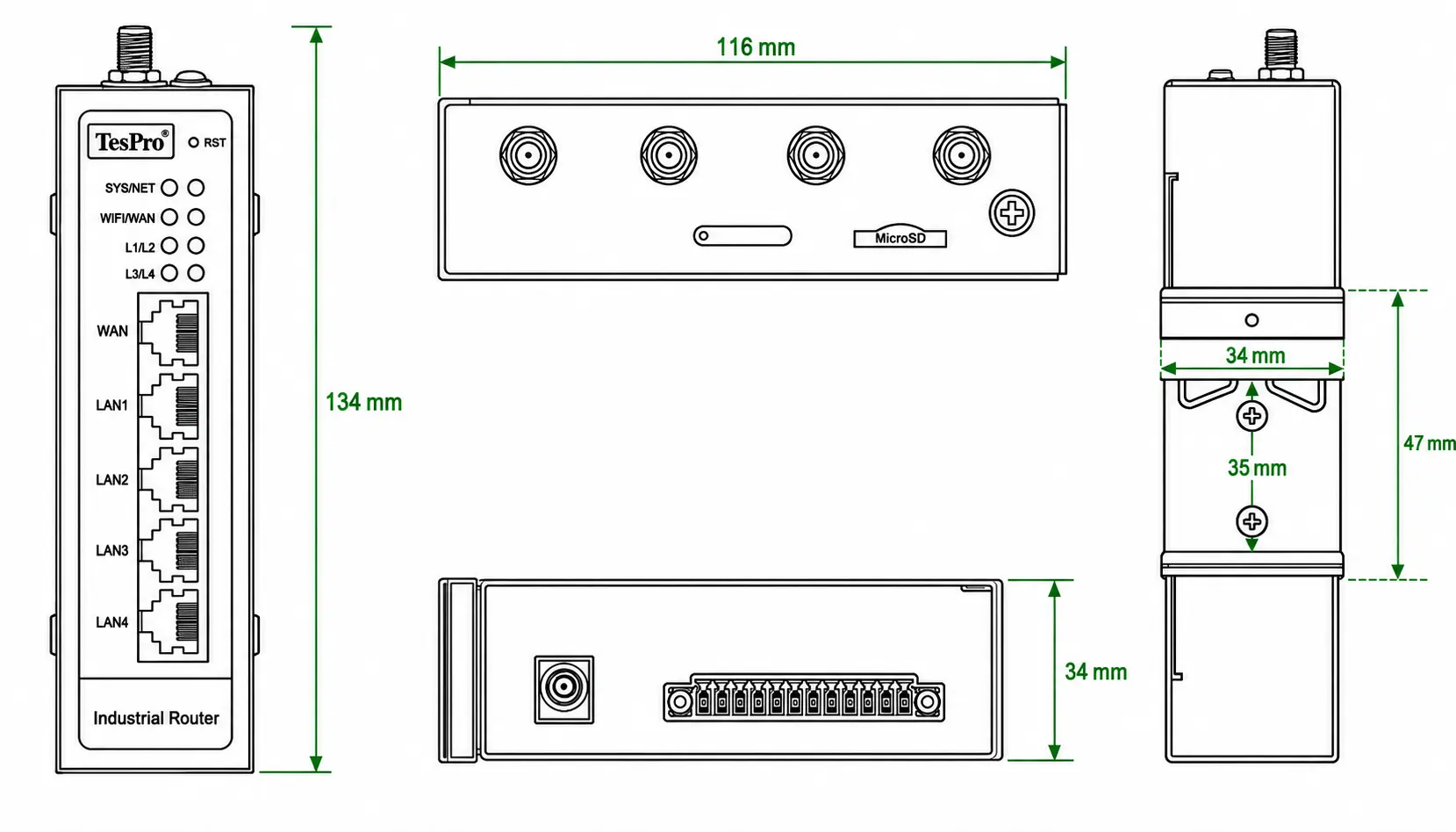
| Ürün Boyutları | 116 × 134 × 34 mm (anten konnektörleri dahil) |
| Koruma Derecesi | IP30 |
| Konut | Metal gövde |
| Montaj Yöntemi | DIN-ray / Duvara monte |
| Soğutma Yöntemi | Fansız soğutma |
| Ürün Ağırlığı | 450 g |
| Güvenilirlik | |
| Şok | IEC60068-2-27 |
| Titreşim | IEC60068-2-6 |
| Drop | IEC60068-2-32 |
| Sertifikalar ve Standartlar | |
| Düzenleyici Sertifikasyon | CE, RoHS |
| EMC Standartları | EN 55032; EN 55035; EN IEC 61000-6-3:2021; EN IEC 61000-6-1:2019; EN 301489-1; EN 301489-17; EN 301 489-52 |
| RF Standartları | EN300328; EN301893; EN301511; EN301908-1/-2/-13 |
| SAR Güvenliği | EN50665; IEC62368-1'DE |
| Siber | EN18031-1; EN18031-2 |
| ESD (Elektrostatik Deşarj) | EN 61000-4-2:2009 |
| Radyasyonlu Bağışıklık | EN IEC 61000-4-3:2020 |
| Patlama (EFT) | EN 61000-4-4:2012 |
| Yükselme | EN 61000-4-5:2014 A1:2017 (Ethernet portları) |
| Yapılan Dokunulmazlık | EN 61000-4-6:2014 |
| Salınımlı Dalga Bağışıklığı | EN61000-4-12, seviye 3 |
| Manyetik Alan Bağışıklığı | EN61000-4-8, Yatay/Dikey 400A/m (>seviye 2) |
Yazılım Özellikleri
| Kategori | TR-444 |
| Endüstriyel Protokoller ve Veri Yetenekleri | |
| Endüstriyel Protokoller | Modbus RTU, Modbus TCP, BACnet, Mbus, OPC UA ve çeşitli diğer protokolleri içerir |
| Modbus | Modbus RTU, Modbus TCP |
| Endüstriyel Cihaz Protokolleri | ProfiNet, EtherCat, EtherNet (isteğe bağlı) |
| BAnet | BAnet |
| OPC UA | OPC UA |
| Elektrik Sayacı Protokolleri | DLT 645-2007, IEC 1107, IEC 61850, IEC 62056-21, DLMS |
| DN3 | Desteklenen modlar: İstasyon, Dış İstasyon; Bağlantı: TCP |
| DLMS/COSEM | DLMS |
| Modbus Özel Kayıtları | Modbus TCP özel kayıt modülü istekleri, yönlendirici içinde dosya okuyup yazabilen Modbus TCP istemci işlevselliğini genişletir |
| Desteklenen Veri Formatları | INT/UINT (8/16/32-bit), 32-bit Float, HEX, ASCII; MSB/LSB ve bayt sırası dönüşümünü destekler (ABCD/DCBA/CDAB/BADC) |
| DTU Fonksiyonu | TCP/UDP şeffaf iletimi destekler; Modbus RTU'dan Modbus TCP'ye dönüşümü destekler; DCTCP/DCUDP modlarını destekler |
| Sunucuya veri | HTTP(S)/MQTT/Azure MQTT; çoklu kaynak veri raporlama; min 1s aralık; Lua scripting |
| Modbus / MQTT Gateway | MQTT Broker aracılığıyla bir Modbus Sunucusuna komut gönderip veri almaya olanak tanır |
| API / Web API | Ağ Web API'sini destekler; Veri almak veya değiştirmek için API uç noktaları |
| Ağ Yetenekleri | |
| Ağ Erişimi | 2G/3G/4G hücresel ağı (veya VPDN özel ağı) |
| Erişim Doğrulaması | CHAP/PAP doğrulamasını destekler |
| LAN Protokolleri | ARP, Ethernet |
| WAN Protokolleri | PPP, PPPoE, DHCP; TCP, UDP, IPv4, IPv6, ICMP, NTP, DNS, HTTP, HTTPS, SFTP, FTP, SMTP, SSL/TLS, ARP, VRRP, PPP, PPPoE |
| Ağ Protokolleri | UPnP, SSH, DHCP, Telnet, SMPP, SNMP, MQTT |
| Rota | Statik yönlendirme, OSPF dinamik yönlendirme |
| NAT | DMZ, NAT, NAT-T, NAT64 (Güvenlik Duvarı altında listelenmiş) |
| DHCP | Statik ve dinamik IP tahsisi, DHCP rölesi, DHCP sunucu yapılandırması, durum, statik kiralamalar; joker MAC adreslerini destekler |
| Ağ Yedeklemesi / Devretme | Wi-Fi WAN, VRRP ve kablolu bağlantı seçenekleri; hepsi otomatik devre çözümleri olarak kullanılabilir |
| QoS | Kaynak/hedef, hizmet, protokol veya porta dayalı trafik önceliği sıralaması; WMM, 802.11 |
| IP Uygulamaları | Ping, Traceroute, DHCP sunucusu, DHCP rölesi, DHCP istemcisi, DNS rölesi, DDNS, telnet destekler |
| DNS/DDNS | DoH (DNS over HTTPS) destekler; birden fazla DDNS servis sağlayıcı yapılandırması ve manuel özelleştirme |
| Wi-Fi | |
| Kablosuz Modlar | Wi-Fi 4: 802.11b/g/n; Wi-Fi 6:802.11a/b/g/n/ac/ax; Erişim Noktası (AP) ve İstasyon (STA) modlarını destekler |
| Wi-Fi Güvenliği | WPA2-Enterprise/PSK, WPA-EAP/PSK, WPA3-SAE/EAP, OWE; AES-CCMP, TKIP, istemci ayrımı, EAP-TLS, 802.11w PMF vb |
| Maksimum Wi-Fi İstemcileri | Wi-Fi 4: 30'a kadar eşzamanlı bağlantı; Wi-Fi 6: 256'ya kadar eşzamanlı bağlantı |
| Hotspot Relay | Wi-Fi hotspot giriş sayfasını sonraki bağlı cihazlara (captive portal rölesi) iletir |
| SSID / ESSID | SSID gizlilik modu; MAC adresine dayalı erişim kontrolü |
| Çalışma Modları | AP, İstemci ve WDS (Kablosuz Dağıtım Sistemi) modlarını destekler |
| Güvenlik Özellikleri | Açık sistem, Paylaşılan anahtar, WPA/WPA2 kimlik doğrulama; WEP/TKIP/AES şifreleme |
| Ağ Güvenliği ve VPN | |
| Ağ Koruma Güvenliği | Port yönlendirme / trafik kuralları / özel TTL; WebUI/CLI güvenlik duvarı yapılandırması; DMZ, NAT/NAT-T/NAT64 |
| Veri Koruma Güvenliği | PPTP, L2TP, GRE, IPSEC VPN, DMVPN, OPENVPN, WireGuard vb. dahil olmak üzere VPN fonksiyonlarını destekler; Dijital sertifika CA'yı destekler |
| Doğrulama | Ön paylaşılan anahtarlar, X.509 sertifikaları, TATACCS, RADIUS (daxili/harici), IP/zaman/giriş engelleme, rastgele şifre oluşturucu |
| Saldırı Koruması | DDoS koruması (SYN flood, SSH, HTTP/HTTPS); Port tarama koruması (SYN-FIN, SYN-RST, X-mas, NULL, FIN) |
| VLAN | Port tabanlı ve Etiket tabanlı VLAN izolasyonu |
| Erişim Kontrolü | SSH, Web arayüzü, CLI ve Telnet için esnek erişim kontrolü |
| Web Filtresi | istenmeyen siteler için kara liste; sadece izin verilen siteler için beyaz liste |
| Sertifika Yönetimi | Sertifika oluşturma araçları; CA, sunucu, istemci, Let's Encrypt ve SCEP sertifikaları oluşturabilir |
| OpenVPN | Birden fazla istemciyi ve bir sunucuyu aynı anda destekler; 27 şifreleme yöntemini destekler |
| IPsec | XFRM, IKEv1, IKEv2; IPsec için 14 şifreleme yöntemi: 3DES, DES, AES128, AES192, AES256, AES128/192/256 GCM8/12/16 |
| WireGuard | WireGuard VPN istemcisi ve sunucusunu destekler |
| GRE | GRE tünellerini, GRE'nin IPsec üzerinden tünellerini destekler |
| PPTP / L2TP | İstemci ve sunucu örnekleri aynı anda çalışabilir; IPsec üzerinden L2TPv3, L2TP destekler |
| DMVPN | Ölçeklenebilir IPsec VPN; Faz 2, Faz 3 ve Çift Hub'ı destekler |
| SSTP | SSTP istemci örneğini destekler |
| ZeroTier | ZeroTier VPN istemcisini destekler |
| Tünel | Proxy üzerinden mevcut istemci ve sunuculara TLS şifrelemesi ekler |
| Ben | Tüneller içinde şifreleme, kimlik doğrulama ve sıkıştırma; istemci ve sunucu modlarını destekler |
| EoIP | GRE RFC 1701 temelli IP üzerinden Ethernet tüneli |
| Yönetim ve Platform | |
| Yapılandırma Yöntemleri | Web arayüzü, CLI, SSH, JSON-RPC, TesproOS vb. |
| Bulut ve IoT Platformu | Google, Huawei, Amazon, Microsoft Azure, iStarOS, Azure IoT Hub, diğer üçüncü taraf bulut platformları ve özel bulutları destekler |
| FOTA | Sunucudan otomatik bildirimle yazılım güncellemeleri |
| SNMP | SNMP (v1, v2, v3), SNMP Tuzağı |
| MQTT | MQTT Broker, MQTT Yayıncısı |
| JSON-RPC | HTTP/HTTPS tabanlı yönetim API'si |
| SSH | SSH (v1, v2) |
| Yükseltme Yöntemleri | FOTA; Web arayüzü |
| Kayıt Fonksiyonları | Olay günlüğü, sistem log, kernel logu |
| Uyarı Fonksiyonları | E-posta mesajı durum uyarıları |
| İstek Üzerine Aktivasyon | İstek üzerine arama, veri aktivasyonu, SMS aktivasyonu |
| E-posta | Çeşitli servislerden e-posta mesajı durum uyarıları alır |
| Yazılım Sistemi | |
| İşletim Sistemi | TesproOS (Linux) |
| Desteklenen Diller | Busybox shell, Lua, C, C , Python |
| Geliştirme Araçları | Oluşturma ortamı dahil SDK paketi |
| Firmware Özelleştirmesi | Özel markalı firmware ve web sayfası uygulamalarını (renkler, logolar vb.) destekler. |
| Paket Yönetimi | Ek yazılım paketlerinin kurulmasını destekler |
| Firmware ve Yapılandırma | |
| Web Arayüzü Yükseltmesi | Dosyadan firmware güncelleme, sunucuda firmware olup olmadığını kontrol et, yapılandırma dosyası, yapılandırma yedeklemesi |
| FOTA Yükseltmesi | Yazılımı güncelle |
| Bulut Toplu Yükseltme | TesproOS sistemi aracılığıyla birden fazla cihazın yazılım/yapılandırmalarını aynı anda güncellemeyi destekler |
| Config-Preserved Upgrade | Mevcut yapılandırmayı kaybetmeden firmware güncelleyin |
| Fabrika Ayarlarına Sıfırlama | Tam fabrika sıfırlaması, IP adresi, PIN kodu ve kullanıcı verileri dahil tüm sistem ayarlarının geri yüklenmesi |
| Çevre ve Güvenilirlik | |
| Sıcak Yedekleme / VRRP | VRRP (Network Backup altında listelenmiş) |
| Çevrimiçi Bağlantı Tespiti | Algılamak için kalp atışı paketleri gönderir; Bağlantı kesildiğinde otomatik olarak yeniden bağlanır |
| Çift SIM Bağlantı Anahtarlama | Çift SIM veya çift eSIM bağlantı anahtarlamasını destekler |
| Yerleşik Gözetmen Köpeği | Cihaz kendi kendini kontrol teknolojisi; çalışma zamanı hatalarından otomatik kendi kendini kurtarma |
Product Details
Arayüz Diyagramı
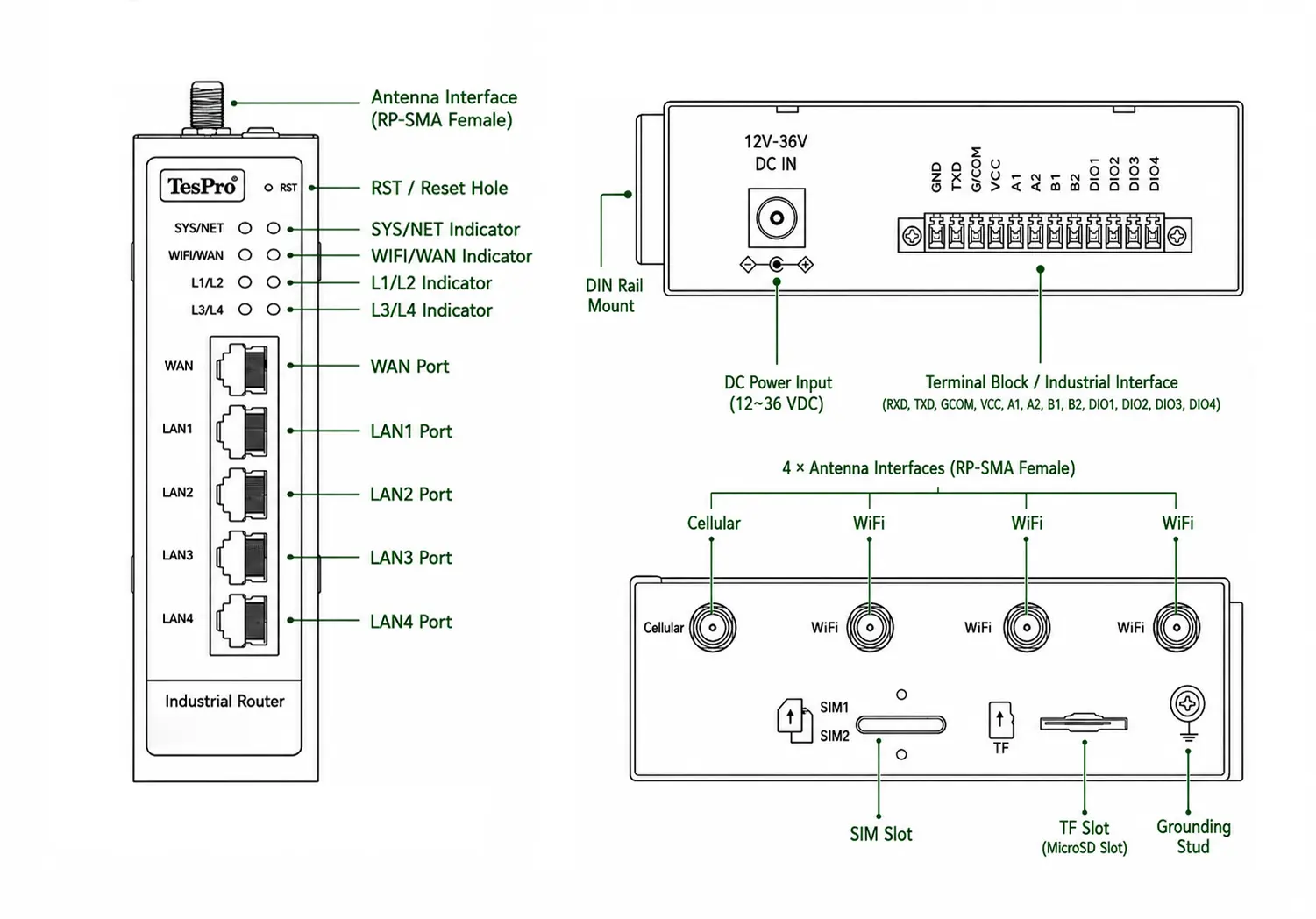
Boyut Diyagramı
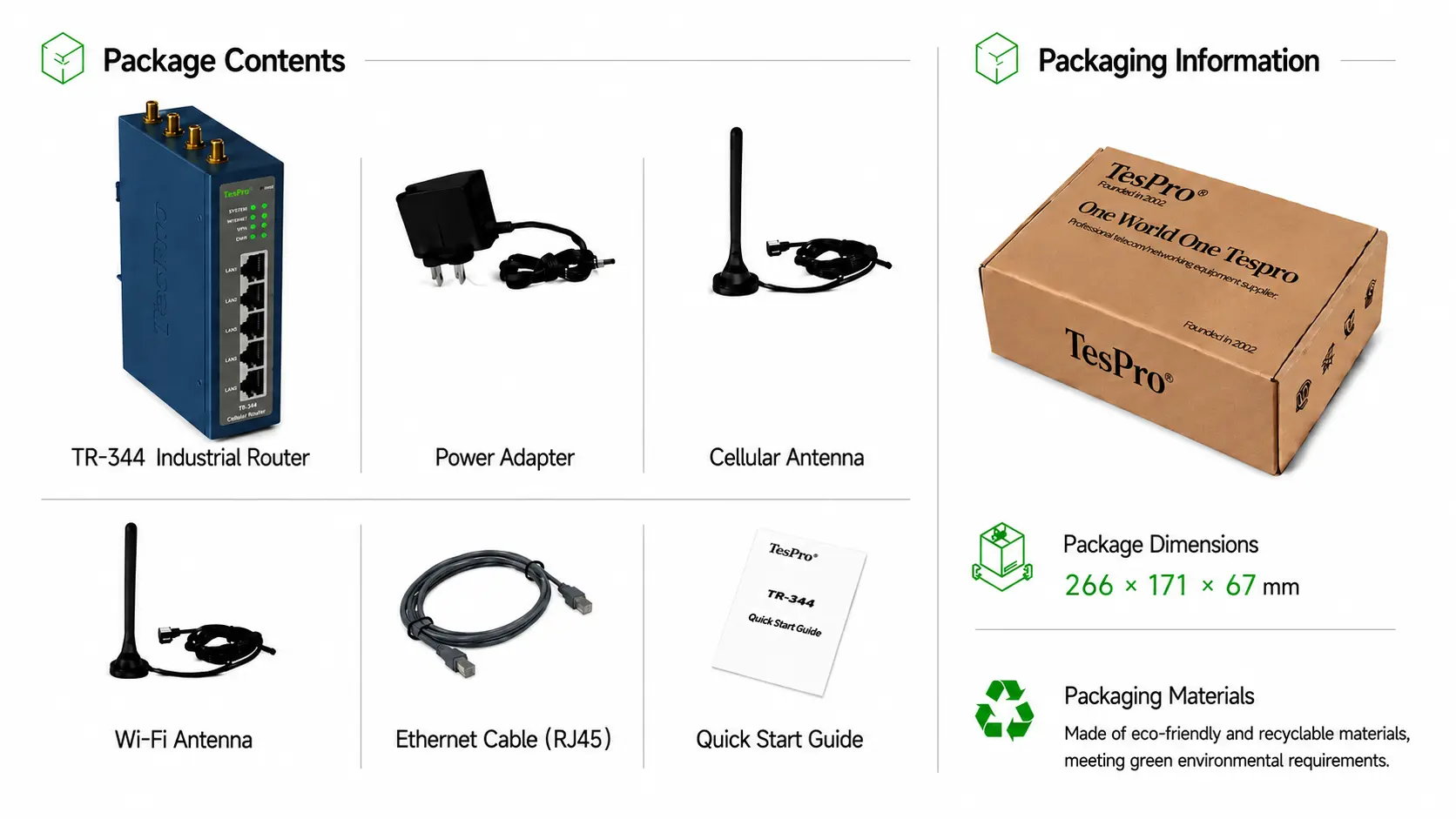
Aksesuar Diyagramı
Explore our Solutions
Endüstriyel Bağlantı ve Ağ Çözümleri
Çeşitli endüstriyel senaryolarda güvenilir veri iletimi için tasarlanmış güçlü hücresel ve Ethernet ağ çözümleri sunmak
Download Materials
Sıkça Sorulan Sorular
Ürünlerimizin performansını, uyumluluğunu ve kullanımını daha iyi anlamanıza yardımcı olmak için, sıkça sorulan sorulara yanıtlar hazırladık. Sorunuz aşağıda listelenmemişse, daha fazla yardım için doğrudan bizimle iletişime geçmekten çekinmeyin.
Bizimle İletişime Geçin
-
What network and communication methods do TR300-Class industrial routers support?

-
The core value of this series is connecting field devices to carrier cellular networks while providing local Ethernet and Wi-Fi connectivity. Using representative models from the official website as examples, TR-324 corresponds to 4G LTE and TR-325 to 5G LTE; the product-series catalog also covers different cellular generations. For multinational projects, support for local 2G/3G fallback, specific LTE/5G bands, carrier certification, and APN configuration should be confirmed in writing by sales according to the target country and module version.
1. Cellular network: TR-324 is designed for 4G LTE, while TR-325 is designed for 5G LTE. If a project requires multi-mode fallback or specific frequency bands, the target region, carrier, and module configuration must be verified.
2. Wi-Fi: The representative model pages list IEEE 802.11 a/b/g/n/ac and cover the 2.4 GHz and 5 GHz bands. Dual-band Wi-Fi can be used for nearby maintenance, local terminal access, or as a backup link; actual throughput varies with the chipset, channel bandwidth, environment, and model.
3. Wired Ethernet: Gigabit LAN is suitable for connecting PLCs, industrial switches, cameras, HMIs, edge devices, or local maintenance PCs to the same network.
4. Redundancy concept: Representative model pages mention dual-SIM standby and backup switching among wired, Wi-Fi, and cellular links. Dual SIM does not mean every model supports eSIM or automatic dual-carrier strategies; projects must confirm the SIM slots, switching policy, and service plan.
-
What interfaces do TR300-Class industrial routers provide, and how are field devices connected?
-
Representative models typically combine “cellular uplink + Gigabit Ethernet + industrial serial ports.” For devices such as energy meters, PLCs, variable-frequency drives, and environmental sensors, Ethernet, RS485, or RS232 can be selected according to the device interface. Routers are better suited to providing connectivity, forwarding, remote maintenance, and local network management; complex protocol acquisition/conversion requirements can be addressed together with an industrial gateway or protocol converter.
1. Ethernet ports: The top sections of the TR-324/325 pages both list a 2×LAN Gigabit configuration; the specification sections also contain descriptions of LAN0 supporting WAN/LAN auto-adaptation and three Gigabit LAN ports. The inquiry should therefore clearly specify “WAN/LAN quantity, Gigabit/100 Mbps, and whether switching is supported.”
2. Serial ports: The pages confirm RS485- and RS232-type interfaces for common industrial field devices. The exact port quantities are not presented consistently, so the BOM should explicitly lock down the number of RS485/RS232 ports, terminal definitions, isolation requirements, and termination-resistor requirements.
3. SIM and antennas: Representative model pages list dual-layer SIM slots and SMA antenna connectors. The quantity and gain of cellular and Wi-Fi antennas should be confirmed together with site coverage, cabinet installation, and lightning-protection requirements.
4. Power and installation: Representative models are rated for DC 12–36 V and include DC power input, reset, and status indication. The product introduction also describes DIN-rail mounting for deployment inside control cabinets.
-
What are the key technical advantages of TR300-Class industrial routers?
-
The advantage of TR300-Class routers is not simply “Internet access,” but the combination of cellular WAN connectivity, field-device access, network redundancy, and industrial environmental adaptability in an engineering-ready connection node. The following six points are suitable for websites, proposals, or customer inquiry responses, but the product-selection note “confirm by model” should be retained.
1. Multi-mode cellular access: 4G or 5G models meet different bandwidth and latency requirements, while dual-SIM and multi-network redundancy can be confirmed on a project basis.
2. Gigabit local networking: Representative models provide Gigabit Ethernet for industrial switches, edge terminals, and local maintenance networks.
3. Industrial serial connectivity: RS485/RS232 helps connect legacy PLCs, meters, controllers, and smart meters, reducing the need for additional interface converters.
4. Remote network operation and maintenance: The router section of the official website mentions VPN support and remote management. The VPN types actually available, account permissions, remote upgrade functions, and platform capabilities must be confirmed according to the software version, project architecture, and security policy.
5. Link-continuity design: Representative pages mention dual-SIM standby and backup switching among cellular, Wi-Fi, and wired links to reduce the impact of a single unavailable network on data backhaul.
6. Adaptability to harsh environments: The TR-324/325 pages list operation from -40°C to +75°C, 5%–95% non-condensing humidity, and wide-voltage DC 12–36 V, making them suitable for industrial cabinets, protected outdoor enclosures, and utility facilities. For high-altitude, high-humidity, high-salt-fog, or high-voltage environments, product certification and enclosure-system design must be confirmed separately.
-
What are the main application scenarios for TR300-Class industrial routers?
-
This series is particularly suitable for projects where “devices are distributed, on-site service is costly, and stable wide-area network backhaul is required.” The following six categories are typical directions; actual solutions should first complete signal testing, network-security design, power-supply evaluation, and protocol integration testing.
1. Industrial automation: Connect PLCs, HMIs, variable-frequency drives, or production-line control networks to enable status viewing, remote maintenance, and cross-site data backhaul.
2. Smart buildings: Connect building controllers, energy meters, HVAC plant rooms, or BMS subnets to upper-level platforms.
3. Outdoor environmental monitoring: Provide cellular backhaul for weather, dust, water-quality, and station sensors; waterproof enclosures, surge protection, and antenna solutions are also required.
4. Intelligent transportation: Used for distributed network nodes such as roadside equipment, parking systems, bus stops, and traffic monitoring.
5. Smart energy and power: Connect electricity meters, distribution monitoring devices, PV inverters, or energy-storage subsystems and transmit data to a central platform.
6. Smart robots and mobile equipment: Provide cellular network access for mobile or remote equipment in warehouses, campuses, construction machinery, and similar scenarios; bandwidth, roaming, coverage, and security policies must be validated on site.
-
Which protocols and systems are TR300-Class industrial routers suitable for?
-
Representative model pages list multiple power-metering and industrial protocols, including DL/T 645-2007, IEC 62056-21, IEC 1107, IEC 61850, DLMS, as well as Modbus RTU, Modbus TCP, BACnet, M-Bus, and OPC UA. Note that the router’s fundamental role is network transmission and remote connectivity. Whether it can “directly parse, acquire, or convert” a specific protocol also depends on the purchased model’s software functions, the peer device, mapping rules, and the project integration method.
1. When an existing host computer, edge gateway, or platform performs protocol parsing, the router can provide stable cellular backhaul and local network access.
2. When multi-device acquisition, offline caching, edge logic, and large-scale protocol adaptation are required, prioritize evaluation of the TG series industrial gateways.
3. When explicit data mapping between BACnet and Modbus, or OPC UA and Modbus, is required, prioritize evaluation of the TC-100 protocol converter.
4. Before purchasing, provide the device protocol manual, point list, baud rate/parity settings, network topology, security requirements, and target-platform interface so that feasibility can be confirmed.
-
How are warranty, pricing, and purchasing handled for TR300-Class industrial routers?
-
The official product pages provide “Request a Quote” and sales contact options, but do not publish a uniform standard warranty period, retail prices for all SKUs, or extended-warranty terms. Therefore, external publications should state that details are “subject to the written sales quotation, order, and contract,” and should avoid presenting an unpublished one-year warranty or 2–5-year extended warranty as an established commitment.
1. Warranty and extended warranty: It is recommended to provide sales with the model, quantity, deployment country, project environment, service-response requirements, and spare-parts requirements, and request written quotations for the standard warranty, 2–5-year extended warranty, or project services.
2. Pricing and samples: Small-quantity samples can be viewed through the Tespro Online Shop; bulk purchases, OEM/ODM, specific frequency bands, custom protocols, or project packages should be formally quoted by sales.
3. Contact sales: The sales quotation email is sales@tespro.com; the general inquiry email is info@tespro.com. The official website lists telephone/WhatsApp numbers +852 4609 4648 and +1-213 610 4797.
4. Learn more: Products, cases, and demonstrations can be viewed through Tespro’s official Facebook, LinkedIn, YouTube, TikTok, X, and Instagram accounts. The official datasheet and written response should be treated as the final technical reference.
5. Inquiry recommendation: Including the model, country/carrier, quantity, network bands, SIM plan, interfaces, protocols, temperature/humidity and enclosure requirements, lightning protection, certification, lead time, and after-sales requirements in the email can significantly improve product-selection and quotation efficiency.

